
Adaptive Teaching Was Never the Problem. Capacity Is.
I've been teaching long enough to remember when differentiation meant producing three versions of the same worksheet.
Thankfully, we've moved on.
The language has changed, our understanding of learning has developed, and today we talk about adaptive teaching. Not because it's the latest educational buzzword, but because it better reflects what good teachers have always tried to do - respond to the learners in front of them.
When people ask me what adaptive teaching really means, I think about the hundreds of tiny decisions teachers make every lesson without anyone noticing. The explanation you change halfway through because a few puzzled faces tell you it hasn't quite landed. The question you direct to a quieter pupil because you know they understand more than they're willing to say. The extra challenge you quietly slide across the desk to the learner who's ready for it before boredom sets in. The reassurance you give to a pupil who's capable but convinced they aren't.
Good teachers have always done this.
What's changed is the sheer complexity of the classrooms we're working in.
I don't believe classrooms have become more difficult because children have changed. They've become more complex because our understanding of children has improved, and that's something to celebrate. We're far better at recognising additional needs, identifying barriers to learning and understanding the science behind how children learn. We know more about cognitive load, retrieval practice, misconceptions, metacognition and the importance of securing understanding before moving on.
With that knowledge has quite rightly come higher expectations.
We now expect teachers to notice more, respond more precisely and adapt more effectively than ever before. I don't think many teachers would argue with that aspiration. In fact, most would embrace it. The challenge isn't believing in adaptive teaching. The challenge is delivering it consistently in the reality of a busy classroom.
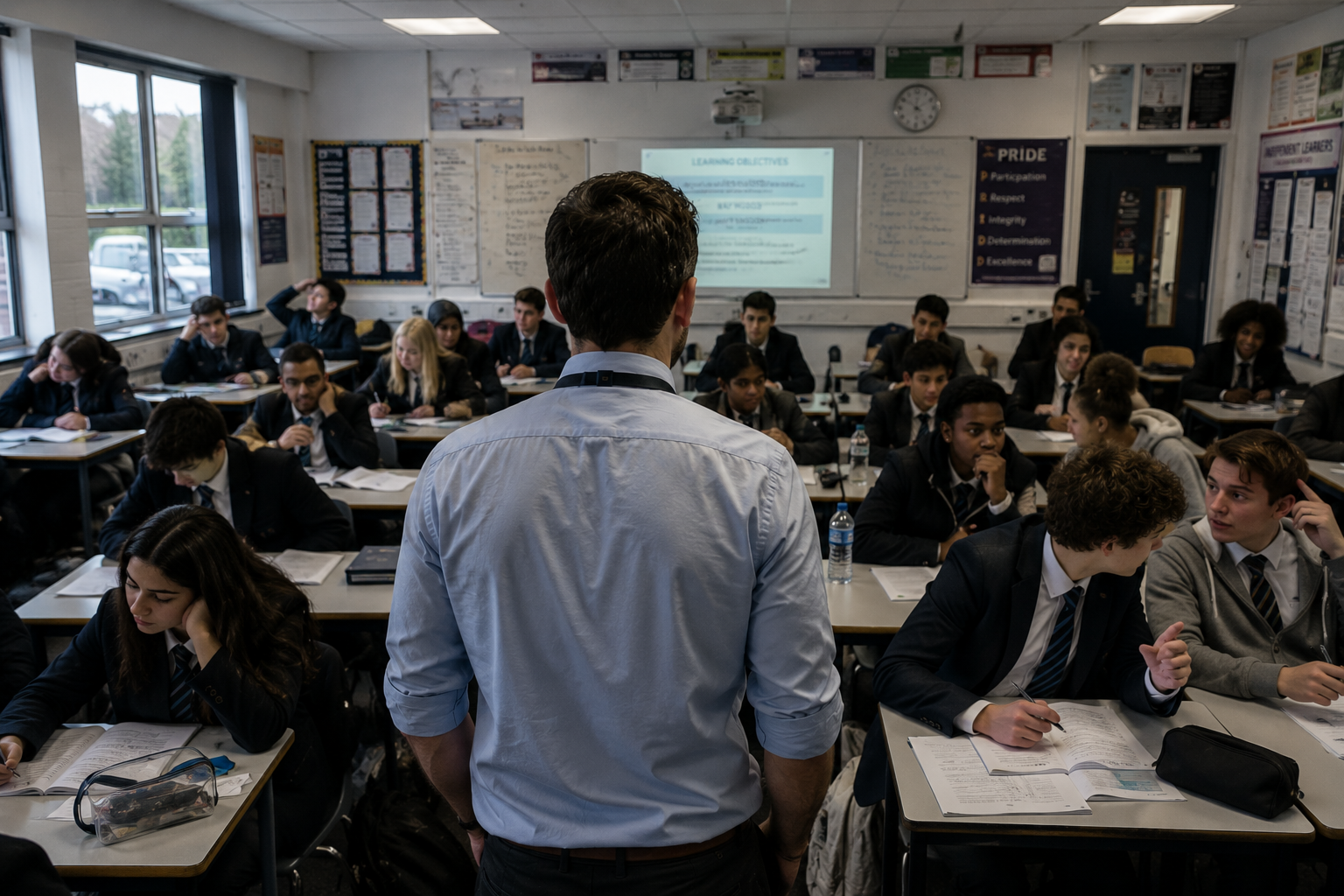
Walk into almost any secondary classroom and you'll see thirty learners who all need something slightly different. One may have identified SEND and benefit from carefully planned scaffolding. Another may already be ready for greater depth and challenge. There will be learners carrying misconceptions from topics taught months ago, pupils whose confidence bears little resemblance to their ability, and others whose understanding appears secure until one carefully chosen question reveals that the foundations aren't quite there.
Every one of those learners deserves the opportunity to succeed.
Every teacher wants to help them succeed.
The difficulty is that there is still only one teacher.
I remember teaching electricity to a Year 9 class a few years ago. One student had grasped series and parallel circuits almost immediately and wanted to know why resistance behaved differently when additional components were added. Two benches away another learner confidently explained that electricity was gradually 'used up' as it travelled around the circuit, which is why the final bulb would always be dimmer. Sitting nearby was a pupil who understood far more than they were prepared to demonstrate because they were terrified of getting the answer wrong in front of their classmates.
Three learners.
Three completely different needs.
One lesson.
None of those pupils were unusual. They represented exactly what classrooms look like every single day.
As teachers we instinctively move between those learners, adjusting explanations, changing our questioning, offering reassurance here, introducing challenge there and constantly trying to build an accurate picture of who genuinely understands and who has simply become very good at appearing as though they do. Most of that isn't written into the lesson plan. It comes from experience, from observation and from knowing your learners well enough to recognise what they need next.
The problem is that there are limits to how many of those decisions one person can make in an hour.
I sometimes think people underestimate just how mentally demanding teaching really is. While explaining one concept you're scanning the room for confusion, remembering who struggled with the prerequisite knowledge last lesson, deciding whether to pause and address a misconception immediately or return to it later, checking that one learner has enough support without removing all of the challenge, while making sure another doesn't spend twenty minutes waiting because they've finished early.
Those decisions happen constantly.
They're rarely noticed.
Yet they often determine whether learning happens at all.
This is why I sometimes feel the conversation around adaptive teaching misses the point.
When teachers struggle to implement everything we'd like them to do, the assumption can be that they need more training or different strategies. In my experience, that isn't usually the issue. Teachers know why adaptive teaching matters. They know what effective practice looks like. They spend every day trying to make it happen.
The limiting factor isn't commitment. It's capacity.
That's not a criticism of schools.
It's certainly not a criticism of teachers.
It's simply the reality of modern education.
I think this is also where technology has sometimes lost its way. For years we've been promised that digital tools would transform classrooms, yet too often they've added another dashboard, another spreadsheet or another set of reports for teachers to work through. Information isn't the problem. Teachers have never lacked information. What they lack is the time to turn that information into meaningful action for every learner.
That simple observation has shaped much of our thinking while building SideCog.
Not because we believe technology can replace teachers, it can't, and it shouldn't, but because we've spent years asking ourselves a different question. If an experienced teacher is constantly making professional judgements about what each learner needs next, how can technology quietly support those judgements rather than create more work?
I often talk about what I call a teacher's fourth sense.
It isn't something you learn during initial teacher training, and it certainly isn't something you can measure on a lesson observation sheet. It's the instinct experienced teachers develop over years in the classroom. The feeling that tells you someone has nodded because they're being polite rather than because they've understood. The glance across the room that spots a misconception beginning to take hold before a pupil has even put their hand up. The quiet confidence to know that one learner needs another explanation, while another simply needs you to step away and let them wrestle with the problem for themselves.
Every experienced teacher knows exactly what that feels like.
Your brain is constantly reading the room, piecing together hundreds of tiny clues and making professional judgements in real time. It's almost impossible to explain, yet it's one of the most valuable skills a teacher develops throughout their career.
That's the fourth sense.
No technology will ever replace it, because it isn't simply about knowledge. It's about relationships, trust, empathy, experience and understanding young people. Great teaching has always been profoundly human, and I hope it always will be.
What technology can do is make more space for that fourth sense to flourish.
If it can identify misconceptions before they become deeply embedded, provide practice that's genuinely matched to a learner's current understanding, or quietly highlight where support is most needed, it allows teachers to spend less time managing the mechanics of learning and more time exercising the judgement that only they possess.
That's the philosophy behind SideCog.
We haven't built it to replace teachers or automate classrooms. We built it because we believe teachers should spend more of their day doing the things only teachers can do. If technology can shoulder some of the routine diagnosis, personalise learning between teacher interactions and provide better insights into understanding, then teachers have more opportunities to use their fourth sense where it matters most - helping the young people sitting in front of them.
Adaptive teaching was never the problem.
Teachers have been adapting their teaching for generations.
The real challenge has always been finding a way to do it well for every learner, every lesson, in classrooms that continue to become more diverse, more inclusive and, ultimately, more human.
That's not a problem we solve by asking teachers to work harder.
It's one we solve by giving them the support they've deserved all along.
Written by
Julian Dance
Related articles
- SideCog Shorts | I want to help my child with revision, but I don’t know how.
Help your child revise without needing to know every answer. Join Julian for four practical 15-minute sessions on getting started, asking useful questions, trying better techniques and noticing progress.
28 September 2026
- AI Can Answer a Question, But Can It Teach?
AI can answer questions, but can it teach? Discover why SideCog puts pedagogy, adaptive teaching and lasting learning at the heart of educational AI.
22 September 2026
- Can Attendance and Behaviour Really Be Linked in an Ofsted Report?
When a school has excellent behaviour but still receives a “Needs Attention” judgement because of attendance, it raises an important question: how much can schools really control? After 20 years in education, Julian Dance reflects on attendance, curriculum relevance and whether we need to look more closely at why some young people disengage from learning.
8 September 2026
- What Trying to Speak Italian Taught Me About Learning
A 658-day Duolingo streak doesn't necessarily make you confident enough to order dinner. A family holiday in Sardinia got Julian thinking about context, confidence, retrieval - and the difference between completing activities and actually learning.
27 August 2026