
The Geese Question and the Problem With “Just Revising”
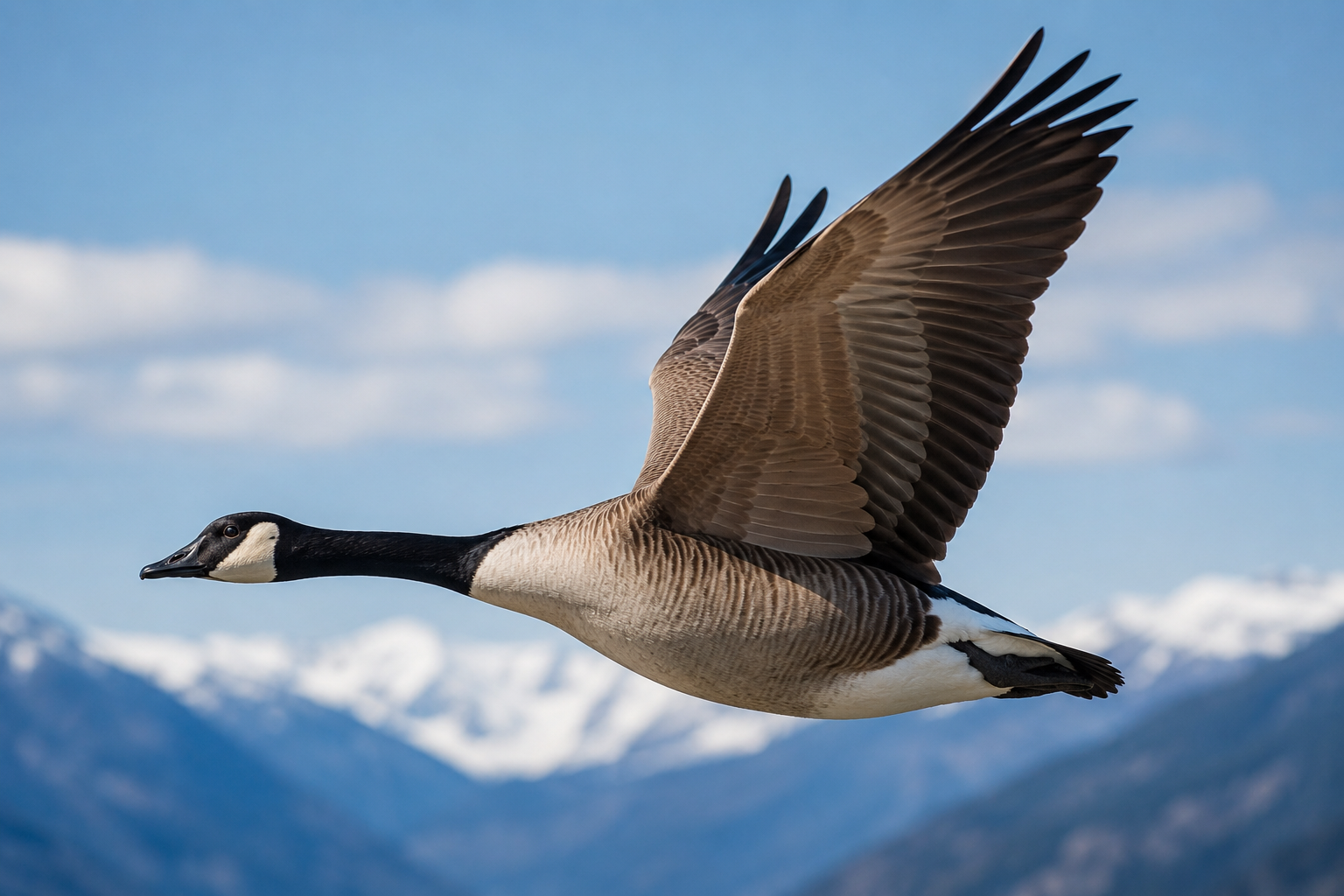
After every GCSE exam, there’s always one question that takes over social media.
This year, for AQA Biology Paper 1, it was the geese question.
Students opened the paper expecting the usual:
- respiration,
- gas exchange,
- circulation,
- adaptations.
Instead, they got a six-marker about two species of geese and why one could fly higher than the other.
For some students, it completely threw them off.
And that reaction says something important about how many students approach revision.
The Difference Between Revising and Understanding
A lot of revision today is built around prediction:
- predicted papers,
- topic lists,
- flashcards,
- memorising mark schemes,
- recognising common question patterns.
That works - up to a point.
But exam boards like AQA are increasingly designing questions that test whether students actually understand the biology, rather than whether they can recognise a familiar wording.
Nobody revised “geese”.
But students did revise:
- diffusion,
- gas exchange,
- aerobic respiration,
- circulation,
- adaptation.
The exam simply changed the context.
Students with deeper understanding could still reason through it:
- Higher altitude means less oxygen.
- Less oxygen means gas exchange becomes more important.
- Better lung surface area allows more oxygen absorption.
- More oxygen supports aerobic respiration.
- More respiration releases more energy for muscles during flight.
That chain of reasoning is real understanding. See connected knowledge and big ideas in GCSE Science.
The Analogy Teachers Have Used for Years
What makes the reaction to the question especially interesting is that science teachers have been teaching this exact principle for years - just in a different context.
A common classroom analogy is altitude training in athletes.
Elite runners and endurance athletes often train at high altitude because oxygen levels are lower. Over time, the body adapts to use oxygen more efficiently, improving aerobic performance.
It is fundamentally the same biological idea:
- oxygen availability,
- respiration,
- energy release,
- performance under demanding conditions.
The geese question simply transferred that same logic into animal adaptation.
But many students didn’t recognise it because they had learned the example rather than the principle.
That distinction matters enormously.
If a student only memorises:
“Athletes train at altitude because there is less oxygen”
then changing the context to geese feels completely new.
But if a student understands:
“Low oxygen environments create selective pressure for efficient oxygen uptake and aerobic respiration”
then both questions are essentially identical.
This is what deeper understanding looks like - not memorising contexts, but recognising underlying biological systems regardless of how the question is framed.
Knowledge That Transfers
The biggest misconception in education is that science is about memorising facts.
It isn’t.
Science is about models and systems.
Once you truly understand a concept, you can apply it almost anywhere.
If you understand diffusion, you can explain:
- alveoli,
- fish gills,
- plant roots,
- dialysis tubing,
- oxygen at altitude,
- athletes training in mountains,
- and apparently, geese.
That’s the difference between surface learning and transferable knowledge.
Surface learning depends on recognition:
“I’ve seen this exact question before.”
Deep learning depends on understanding:
“I understand the process, so I can apply it in a new situation.”
Exams increasingly reward the second one.
Why “Random” Questions Feel Unfair
Many students said the geese question felt impossible to revise for.
In one sense, they’re right.
You cannot realistically memorise every possible scenario an examiner could invent.
That is exactly why deeper knowledge matters.
If revision becomes purely:
- memorising answers,
- spotting patterns,
- predicting topics,
then the moment a question changes context, confidence collapses.
Students often think:
“I revised so much — why couldn’t I answer this?”
But revision hours and understanding are not always the same thing. Flashcards - Revising or Copying?
You can spend hours rereading notes and still struggle with application if the knowledge never becomes interconnected.
What Good Science Teaching Actually Looks Like
The best science teachers don’t just teach content.
They teach relationships between ideas.
A student who deeply understands biology can connect:
- lungs → oxygen uptake,
- oxygen → respiration,
- respiration → energy release,
- energy → muscle contraction,
- muscle contraction → flight performance.
That’s why experienced teachers constantly ask:
- “Why?”
- “What happens next?”
- “How are these linked?”
- “Can you apply this somewhere else?”
Those questions build flexible understanding.
And flexible understanding survives unfamiliar exam questions.
The Real Lesson From the Goose Question
Ironically, the geese question may have been one of the most educational parts of the paper.
Not because it was about birds.
But because it exposed the difference between:
- memorising biology,
and - thinking biologically.
In the long run, deep understanding matters far beyond exams anyway.
Real-world problems never arrive labelled by topic.
Doctors do not diagnose patients using mark schemes.
Engineers do not solve problems by memorising past papers.
Scientists do not discover new ideas by recognising textbook wording.
They understand principles deeply enough to apply them in unfamiliar situations.
That’s the skill exams are trying - sometimes clumsily - to measure.
Even if it does involve geese.
Written by
Julian Dance
Related articles
- SideCog Shorts | I want to help my child with revision, but I don’t know how.
Help your child revise without needing to know every answer. Join Julian for four practical 15-minute sessions on getting started, asking useful questions, trying better techniques and noticing progress.
28 September 2026
- AI Can Answer a Question, But Can It Teach?
AI can answer questions, but can it teach? Discover why SideCog puts pedagogy, adaptive teaching and lasting learning at the heart of educational AI.
22 September 2026
- What Trying to Speak Italian Taught Me About Learning
A 658-day Duolingo streak doesn't necessarily make you confident enough to order dinner. A family holiday in Sardinia got Julian thinking about context, confidence, retrieval - and the difference between completing activities and actually learning.
27 August 2026
- Flashcards - Are You Revising or Just Copying?
Flashcards are one of the most popular revision tools, but using them badly can create the illusion of learning. Julian explores how to make them work harder.
10 August 2026