
When did GCSE revision become just a memory game?
I've been helping my Year 11 daughter with her Science Mocks. I've found I can ask her for a definition and she’ll blurt it out before I’ve finished the question. But when I ask her to use that same idea to explain why something happens, I sometimes get a blank.
The other evening we worked on the reflex arc. She could remember the key terms, including receptors, nerve impulses and the spinal cord. The tricky bit was working out how they fitted together. Think about what happens when you touch a hot pan. Receptors in your skin detect the painful heat. A sensory neurone carries an electrical impulse to the spinal cord, where a relay neurone passes it on to a motor neurone. The motor neurone carries the signal to muscles in your arm, which contract, pulling your hand away before you’ve had time to think about it.
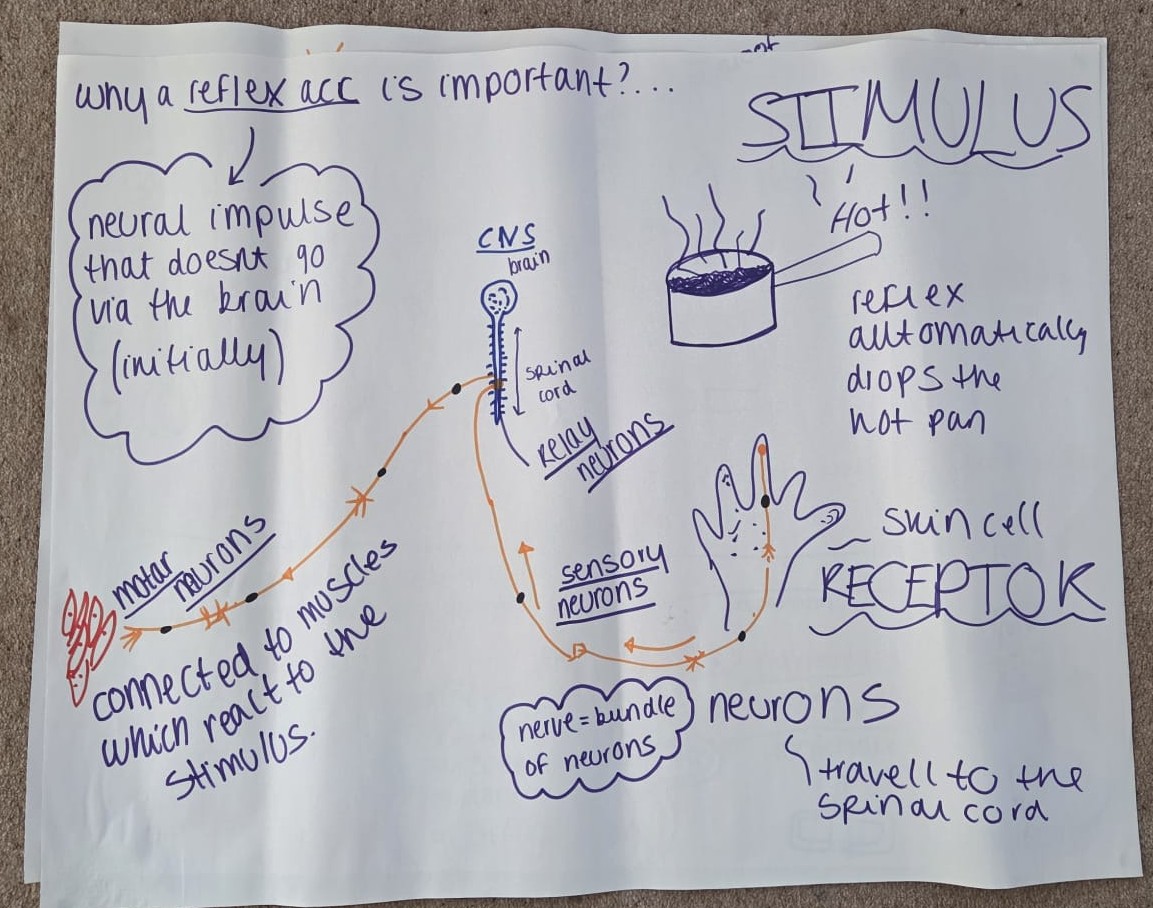
Once we put those facts together, it clicked. She could see how touching something hot led to her hand pulling away. Each term she’d learnt had a job in the explanation.
At home, Year 11 GCSE revision often starts with pages and pages of keywords she’s been sent home to learn. She’s put the work in. I’d like more of that time to go towards making the kinds of connections we made that evening.
I wonder how much of that will show up in her mock results. If she knew the words and still couldn’t answer the question, what would another six months of learning lists achieve?
Whoever remembers the most items wins?
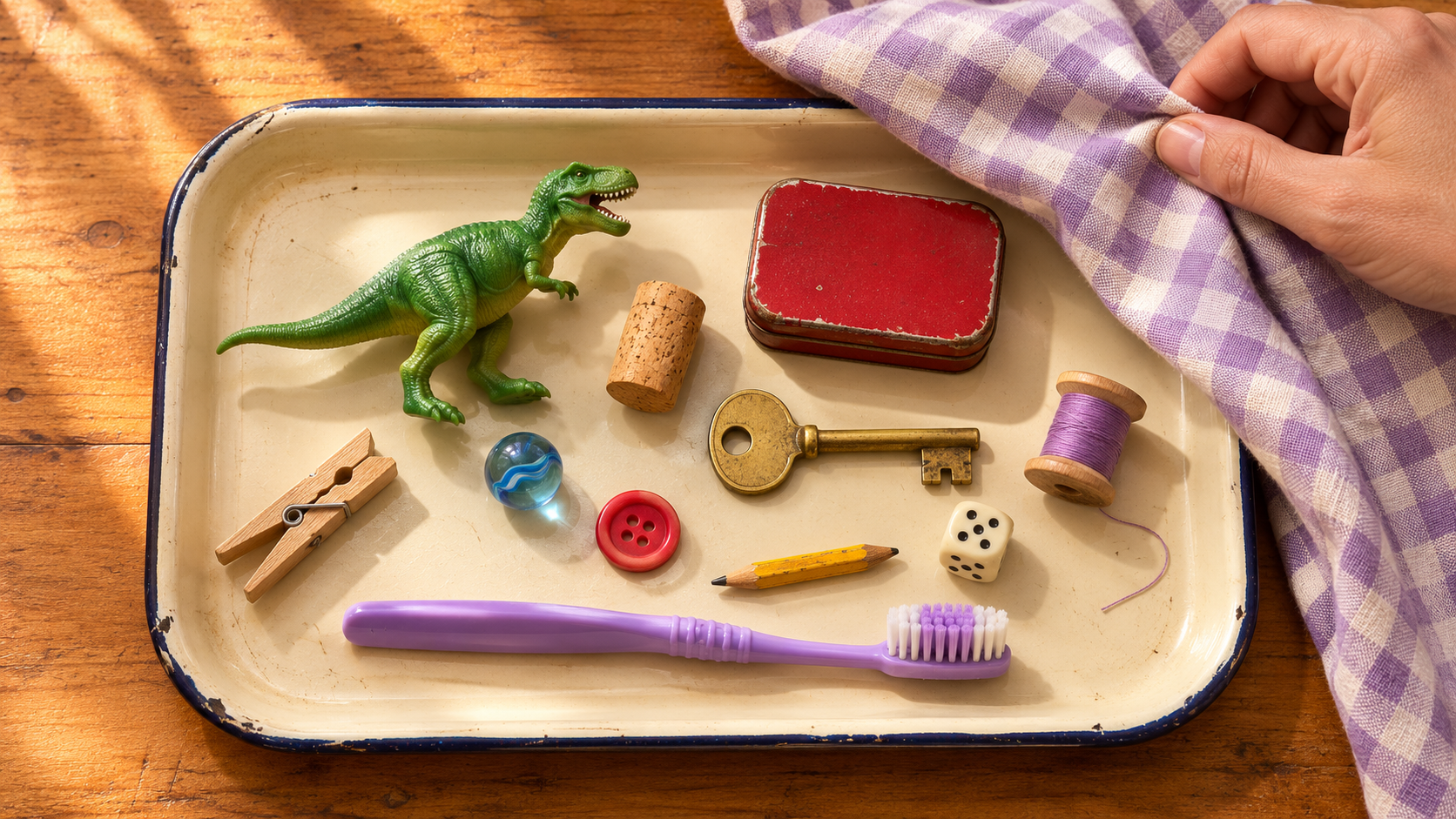
Do you remember that game at Scouts or Guides? Someone puts 20 random objects on a tray, gives you a minute to look, then covers them with a tea towel. Whoever remembers the most wins.
One trick is to make up a story. The toy dinosaur finds a key, opens a tin and pulls out a toothbrush. Remember the dinosaur and you’ve got a way to get to the key, then the tin, then the toothbrush.
Even in a game about remembering, it helps to make connections. GCSE questions ask pupils to go a step further and work out which ideas fit together to explain something they haven’t seen before.
The AQA Biology geese question from 2025 shows what it means to apply knowledge in GCSE science. It asked pupils to explain why one species could fly higher than another. Knowing the definition of aerobic respiration was a starting point. Pupils had to connect oxygen supply, respiration and the energy muscles need for flight.
That kind of thinking matters across GCSE Combined Science. Ofqual allocates 40% of the marks to applying knowledge and understanding and another 20% to analysing information and ideas, including interpreting evidence and drawing conclusions. How much of a pupil’s revision time is spent practising those skills?
The moment genetics clicked
I saw what making one connection can do when I was tutoring a pupil who was struggling with genetics this week. She’d attended the lessons and worked through a worksheet on DNA and was getting upset because she still couldn’t make sense of it. We slowed down and talked through what she already knew.
I asked her to picture a dictionary with two columns, a word on one side and its meaning on the other. Matching each word to its definition gave her a way to picture how a base on one strand of DNA pairs with a particular base on the other. The penny dropped. She had something familiar to connect the new idea to.
I’ll think about that moment when I see another workbook come home. Too often, the task is to recall the right word, fill in the box and move on. A pupil can complete a whole page without being asked why something happens, how it connects to what they already know, or where else they could use the idea. Those are the questions I want my daughter spending more time on.
When a science practical becomes a list of steps
Something else I’ve noticed is how easily a science practical can become another list to memorise. It’s a chance for pupils to be curious, test things out and connect what they already know with what they observe.
Take an experiment to find out which material insulates a cup best. A pupil might remember that the water in both cups has to start at the same temperature. Ask them why, and they have to think about what makes it a fair test. If one cup starts off hotter, how can they tell whether the difference in cooling is down to the insulation or the starting temperature?
Handling the cups and comparing their own readings gives pupils a reason to ask that question. The Royal Society and Engineering UK’s Science Education Tracker found that the share of Year 10 and 11 pupils in England who said they did hands-on practical work at least once a fortnight fell from 44% in 2016 to 26% in 2023. Watching video demonstrations became more common over the same period.
I can see why a demonstration or video might be the practical choice on a given day, with a lot of curriculum to cover. The thinking can happen there too if pupils get a chance to predict what will happen and explain why. When revision comes round and all that’s left is a list of steps to learn, it’s easy to lose sight of what each step was for.
Once a pupil understands why starting temperature matters, they have something they can use in a different experiment. That’s the thinking behind how we teach GCSE science around big ideas.
How to revise after GCSE mocks
When my daughter’s mocks come back, I want to start with one question she lost marks on. I’ll ask her what she knew, where she got stuck and how she’d tackle a similar question in a different context. If she forgot a fact, we can practise recalling it. If she knew the facts but couldn’t see how they fitted together, we can talk through that connection and try a fresh question.
If you’re having that conversation at home, our guide to helping a child who’s struggling with GCSEs has ideas for getting started.
That’s part of why we built SideCog. Pupils can talk through what they know, get another explanation when they’re stuck and try a fresh question to see if they can use the idea themselves. Try SideCog free.
When the tea towel comes down, the child who remembers the most wins. Over the next six months, I want to give my daughter more chances to ask why things happen and work through the answer. Then, when a question comes up in a way she didn’t expect, she’ll have somewhere to start.
Source references
Ofqual. Ofqual’s GCSE Combined Science assessment requirements.
The Royal Society and Engineering UK. Science Education Tracker 2023.
Written by
Julian Dance
Related articles
- What we lose when we rush through Key Stage 3
Former head of science Julian Dance explains why the DfE’s plans for Key Stage 3 matter, what strong foundations look like in a Year 8 science lesson and why SideCog chose Oak National Academy’s curriculum.
16 November 2026
- Can an AI Tutor Replace Private 1:1 GCSE Tuition?
Could an AI tutor help your child with GCSE revision, or will it simply give them answers? Julian Dance explains what good tutoring actually does, where AI can help, where a human tutor still matters, and four questions parents should ask before choosing a learning tool.
6 November 2026
- SideCog Shorts | I want to help my child with revision, but I don’t know how.
Help your child revise without needing to know every answer. Join Julian for four practical 15-minute sessions on getting started, asking useful questions, trying better techniques and noticing progress.
28 September 2026
- Why Go and Revise So Often Ends in an Argument
What two decades in classrooms have taught me about why teenagers struggle to start revising and how parents can help
24 September 2026